Pocket-Hole Screws vs Structural Wood Screws: Where Each Belongs
When to use concealed pocket-hole joinery on indoor furniture and when to step up to structural washer-head wood screws on framing.
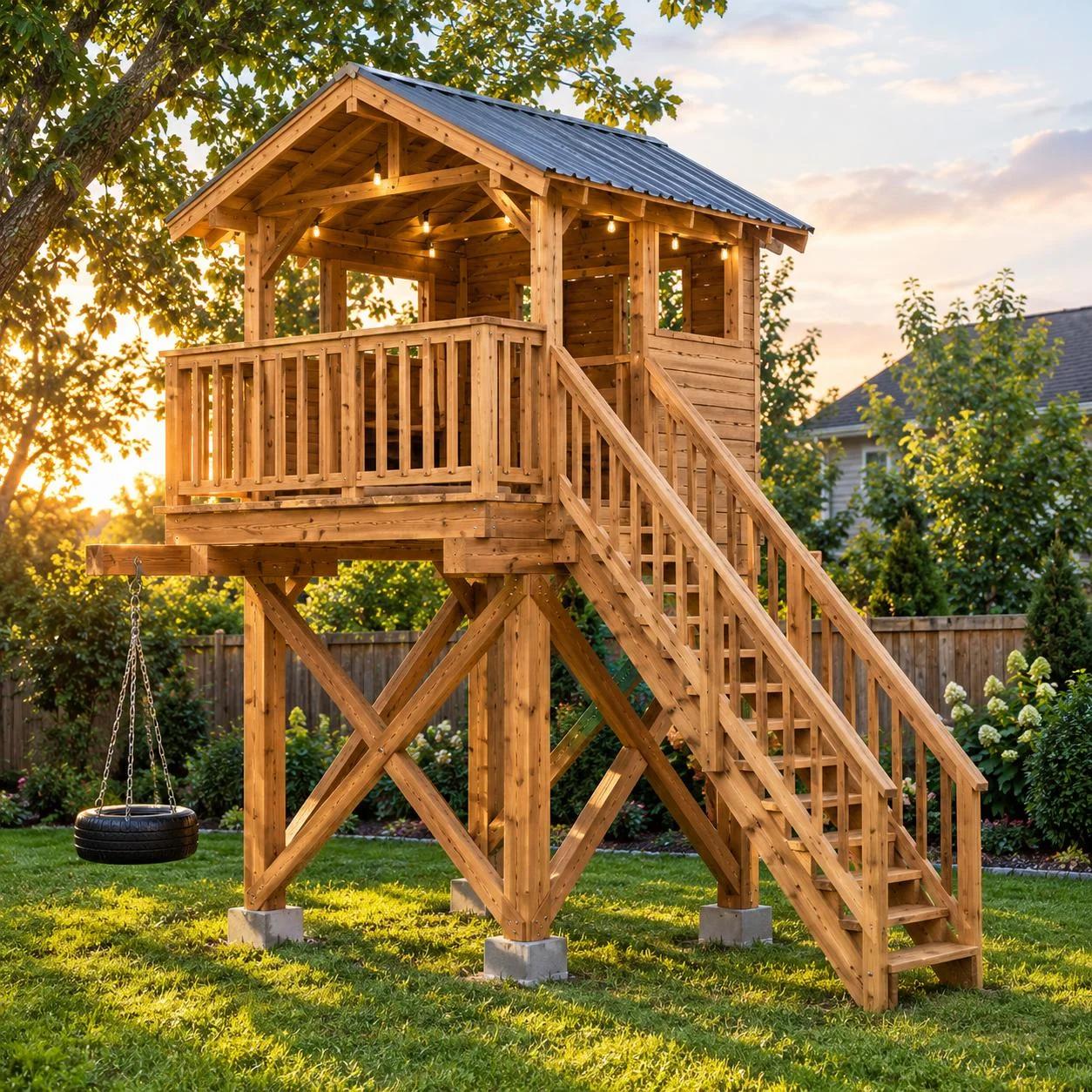
Where pocket-hole screws shine
Pocket-hole joinery acts like an internal clamp: driving a washer-head screw at a 15-degree angle pulls face frames, cabinet carcasses, and indoor pine furniture joints tight without waiting hours for bar clamps to dry.
- Use coarse-thread screws in softwoods (pine, fir, cedar) and plywood.
- Use fine-thread screws in hardwoods (oak, maple, birch) to prevent splitting.
- Pair with wood glue on any permanent indoor joint—the glue provides the long-term shear strength while the pocket screw holds alignment.
When to use structural wood screws or bolts instead
On heavy outdoor structures—such as 8×10 garden sheds, roadside farmstands, rolling workbenches, and tall backyard windmills—wind loads and racking forces require fasteners with higher shear ratings. Use 1/4 in or 5/16 in (6–8 mm) structural washer-head wood screws or hot-dipped galvanized carriage bolts at corner post-to-beam connections, floor rim joists, and diagonal cross braces.
Free sample blueprint
Want a sample PDF plan for your shop clipboard?
Get our free sample woodworking blueprint with dual imperial and metric measurements, cut list, and 3D assembly views sent to your email.
Get the free sample plan